Meet The Founder Behind Quahog Bay Conservancy
8
SEPTEMBER, 2026
QBC’s Founder
Pat Scanlan
Long before Quahog Bay Conservancy became a leader in marine science, conservation, and working waterfront stewardship, it began with a simple belief: that healthy coastal communities depend on healthy coastal ecosystems.
In this special founder profile, we sit down with Pat Scanlan to reflect on the organization’s beginnings, the lessons learned along the way, and his vision for the future of Quahog Bay. Read the full interview to learn how one idea grew into a community-driven effort to protect and strengthen the bay for generations to come.
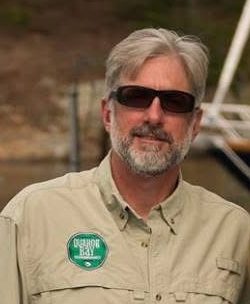
For Quahog Bay Conservancy founder Pat Scanlan, Quahog Bay has always been more than a beautiful place: it’s home. What began as childhood summers with his uncle on Snow Island eventually grew into a long-term commitment to protecting the bay, supporting the working waterfront, and investing in the future of marine science and education in Harpswell.
“I can’t fix the whole world. But I can take care of my backyard.”
Laura: What first inspired you to found QBC?
Pat: I came to Quahog Bay as a kid to help my uncle on Snow Island, and I just fell in love with coastal Maine. Years later, my wife Mary and I came back to Harpswell and really reconnected with the bay. Then I learned that shellfish harvesting areas were closed because of pollution, and it made me realize something needed to change. I said, “We’ve got to do something about this.” That’s really where QBC started.
Laura: What were some of the first projects QBC took on?
Pat: First, we repaired failing septic systems on the bay. Then I bought the pump-out boat as a quick way to help reduce overboard discharge that was polluting the area. After that came marine debris cleanup, water quality monitoring, green crab mitigation, and eventually oysters. We just kept responding to what the bay needed.
Laura: QBC has grown far beyond cleanup projects. How do you think about the organization today?
Pat: What I want people to understand is that QBC is here to support the working waterfront. I started this organization to help fishermen and the coastal community. We started with clam harvesting, we’ve worked closely with commercial lobstermen, and we care deeply about the future of all commercial fisheries in Maine. We want to see the next generation of junior fishermen supported and thriving in Harpswell. I’m dedicated to the future of commercial fishing here. We care about healthy ecosystems because healthy ecosystems support the people and communities who depend on them.
Laura: You’ve also pushed QBC toward innovation and research. Where does that come from?
Pat: I’ve always liked hands-on learning and experimentation. We’ve explored everything from aquaponics to microplastics research to kelp and biofouling projects. Some ideas work better than others, but the point is to keep exploring and learning.
Laura: What excites you most about the future Harpswell Marine Institute?
Pat: I’m not trying to build a Woods Hole-sized institution, but we can build something impactful here in Harpswell – science with integrity, hands-on education, and research that helps coastal Maine communities. It’s about creating a STEM-focused space that serves the community and supports practical marine science.
“We’re keeping an eye on our backyard – and understanding it.”
Laura: Education has always been central to QBC. What do you hope students take away from their experience?
Pat: Confidence and momentum. I love watching interns come in thinking only about finishing their undergraduate degree, then leaving motivated to pursue master’s programs or PhDs because they’ve seen real-world science in action. Hands-on learning changes people.
Laura: What message would you like to share with the Harpswell community?
Pat: This organization is here to do good things for the town, the bay, and the people who depend on it. We walk the talk. Everything we’re building comes from a real commitment to this place and this community.