A Life on the Water, A Steady Hand at QBC
20
JANUARY, 2026
Peter Valente
Get to know QBC
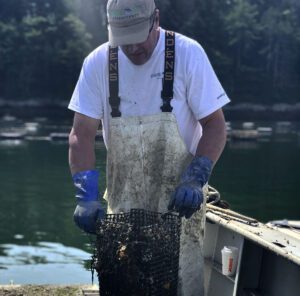 As the new Interim Executive Director of Quahog Bay Conservancy, I’ve been spending time listening, especially to the people who know this bay best. Pete has been with QBC since the beginning, following a long career in the Coast Guard, where he retired as Chief Warrant Officer. Few people have seen Quahog Bay from as many angles as he has, and his perspective offers a grounded look at where QBC has been and where it’s headed.
Q&A: A Life of Service on the Water
Laura: You’ve been around QBC since the early days. When you think back to how it started, what stands out to you?
Pete: In the beginning, it was just a few programs. The pump-out boat, trash pickup, water quality testing, that was really the core. Then oysters came along in 2015. It was pretty simple back then.
What’s changed is the scale. We went from just a couple of people to a real team, interns, seasonal staff, more programs, and more going on. It’s grown a lot, and it still feels rooted in the same basic idea: get out on the water and do something that makes a difference.
Laura: You’ve spent decades on the water, including a long career in the Coast Guard. How does that experience show up in your work at QBC?
Pete: A lot of it is just being comfortable on the water. Navigation, boats, knowing how things move and change, that stuff becomes second nature after a while.
But honestly, a big part of it is dealing with people. In the Coast Guard, you work with all kinds of personalities, often in tight spaces, and for long stretches of time. You learn how to read people, how to keep things steady, and how to not make things harder than they need to be. That carries over here more than anything.
Laura: QBC does a lot of very hands-on work, pump-outs, debris removal, green crab trapping. Why do those programs matter?
Pete: Because you can see the results. The pump-out boat, for example, it’s not glamorous. It’s kind of a crappy job, literally. But people really appreciate it. You meet a lot of good folks out there, and they’re grateful someone’s doing it.
Same with trash pickup. You clean up your own bay, right in front of you. That’s something people understand. You don’t need a big explanation. You just see that it’s cleaner than it was.
Laura: Looking ahead, where do you think QBC is headed next?
Pete: It feels like the next phase is more science-based, especially with the new building going up – it sounds like there’s going to be more research and learning happening here.
At the same time, I think the core programs still matter. The visible stuff, pump-outs, debris removal, those are the things people connect with. You get some satisfaction from seeing progress, even if it’s incremental.
Laura: Supporting Maine’s working waterfront is a big part of QBC’s mission. What does that mean to you?
Pete: The commercial fishing industry has taken some real hits. Groundfish is pretty much gone here. Shrimp disappeared, and that was huge. Lobstermen used to shift over and make a living during shrimp season.
I don’t know exactly how you fix all that, but supporting fishermen matters. Even small things, creating opportunities, sharing space, respecting how people make their living, that goes a long way. This work is really local. It’s about this bay and the people who depend on it, and it’s also something other places could learn from.
Laura: After all these years, why does this work still feel worth doing?
Pete: Because it’s right in front of you. You live here. You work here. You clean up the bay you use every day.
It doesn’t have to be complicated. With some effort and some commitment, you can make a real difference. And over time, people notice.
Laura: I was grateful to have time to talk to Pete and have him be the very first team member featured for our newsletter. Pete’s long view of Quahog Bay is shaped by service, experience, and respect for the working waterfront. His perspective is a reminder that conservation and community go hand in hand, and that the most meaningful progress often comes from steady, hands-on work.
Subscribe to our Awesome Newsletter.